Proper oral care for every individual including dependent seniors seems pretty obvious as part of their daily routine, but what if dependent seniors with lack of dexterity cannot perform oral care properly and efficiently?
Lack of dexterity can come alongside a disability. This can be caused by tremors and the inability to latch on to a device/material (Oral care for dependent seniors, 2019). The dexterity level should be assessed each continual care to monitor for not only early disease stages, but also how the client is adapting to using a device (Oral care for dependent seniors, 2019). During the client assessment phase during their routine dental visits, the dental hygienist (as well as their caregivers) can assess for their clients’ (Darby and Walsh, 2014):
- Range of motion – The client (if able to) is reaching for their oral cavity with their arms and hands. This can determine the length the device needs to be depending on the client’s ability to reach the mouth (Darby and Walsh, 2014).
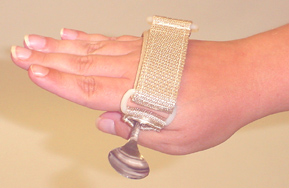
- Grip strength – Some dependent seniors with a disability, such as those with arthritis or neuromuscular disorders, may have difficulty holding certain devices because of how narrow or small they may be. Their grip strength is assessed by having the client hold on to various size of devices. This can also be done by having the hygienist (or caregiver) grip the clients’ hands gently and ask them to squeeze with as much force as possible for 1 minute – this will help determine the strength needed to be able to latch on to the device for a given time that they present with. If they are unable to hold for 1 minute, a universal cuff (such as a Velcro strap) may be recommended in order to hold the device for the needed amount of time (Darby and Walsh, 2014).
- Skill level – The clients are observed by the hygienist or caregiver on how they are self-performing oral care for their own oral cavity. During this step, the ones observing will be able to assess any areas that are unable to be reached or are being missed and if they are brushing the tongue (Darby and Walsh, 2014).
For those dependent seniors with limited dexterity, there are a number of oral self-care aids that are available/recommended if needed. These devices may be motivating for the clients to try on their own or with the help of their caregivers (Darby and Walsh, 2014):
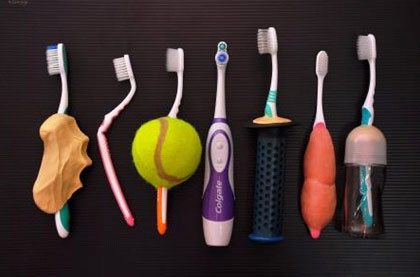
- Plastic rulers and rods – attached to the toothbrushes and floss holders with heavy electrical tape to avoid from coming apart (Darby and Walsh, 2014).
- A toothbrush with a compact head size to better fit intra-orally (Darby and Walsh, 2014).
- The plastic manual toothbrush handle may be bent by placing it above a flame or running the handle under hot water – this will help to angle the brush bristles against the curve of the arches of the teeth (Darby and Walsh, 2014).
- Built-up (wider) device handles with different materials to better accommodate those with a weaker grip strength – such as bicycle grips, Styrofoam molds, and arts-and-crafts materials. These materials can be used with their toothbrushes and floss holders and changed when necessary (Darby and Walsh, 2014).
- Power toothbrushes are also recommended for poor dexterity (Darby and Walsh, 2014).
- A universal cuff (Velcro strap) can be attached around the arm or wrist to help with stabilization (Darby and Walsh, 2014).
- Oral care foam stick dipped in povidone-iodine mouthwash – for about 1 minute to remove food and plaque remaining on the teeth (Oral care for the dependent elderly, n.d.).
- Spatula-shaped brush with light scrubbing to clean the tongue (Oral care for the dependent elderly, n.d.).
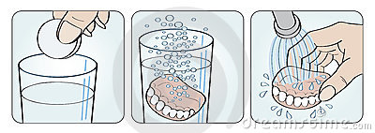
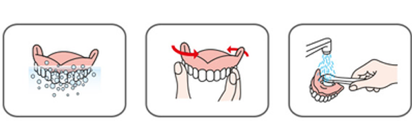
- Caregivers may assist in cleaning their dentures daily, as recommended (Oral care for the dependent elderly, n.d.).
The dependent seniors positioning may also need accommodating. Those with neuromuscular disorders may need a stabilization device to avoid them from moving away from their upright and secure positioning by providing materials such as backrests, headrests, seatbelts, chest straps, lateral trunk supports and hip guides (Darby and Walsh, 2014).
For the individuals who are prone to having seizures, immobilization devices should be used with caution – should be removed in the event of a seizure (Darby and Walsh, 2014).
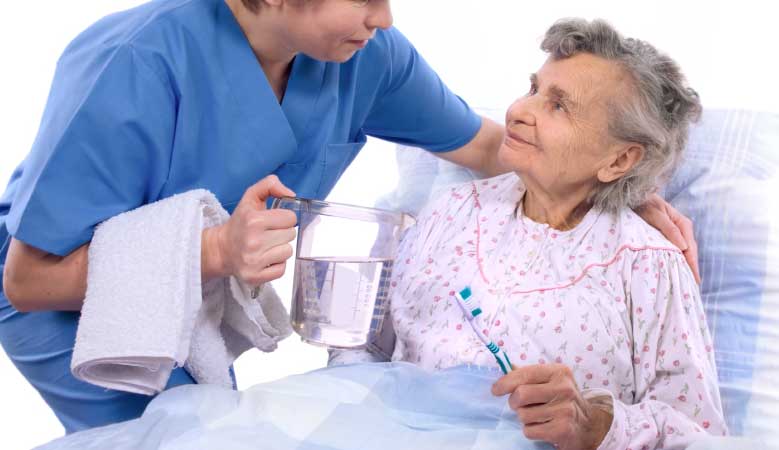
For caregivers, some assisting recommendations can be to have the senior sit down, stand beside the senior (not directly in front of them), wrap their arms around the seniors’ head to support their chin/head using their hands (Oral care for dependent seniors, 2019). Continue with gentle oral care. If the senior is unable to open their mouth, the caregiver must do their best to brush anything they can access (Oral care for dependent seniors, 2019). Even if they are only able to brush the anterior part of their teeth and the sides of their teeth facing their cheeks, this will still improve their oral health by an increasing amount (Oral care for dependent seniors, 2019).
Every dependent senior should be assessed for their level of dexterity in order for them to receive the most optimal self oral care as possible, preventing any risks of oral disease (Oral care for dependent seniors, 2019).
JE
References:
Darby and Walsh, 2014. Dental Hygiene: Theory and Practice (4th Edition) [Texidium version]. Retrieved from http://texidium.com
Don’t Let Hand Pain Prevent Proper Dental Hygiene. (2017). Retrieved from Dentistry of the carolinas: https://dentistryofthecarolinas.com/2017/02/23/hand-pain-dental-care/
Oral care for dependent seniors. (2019, May 31). Retrieved from Queen of dental hygiene: https://queenofdentalhygiene.net/2015/06/oral-care-for-dependant-seniors/
Oral care for the dependent elderly. (n.d.). Retrieved from National Center for Geriatrics and Gerontology: https://www.ncgg.go.jp/hospital/english/clinics/documents/oralcavitycare_en1.pdf
Utensil Holder. (n.d.). Retrieved from Boomer store: http://www.boomerstore.biz/utensilholder.aspx
What are activities of daily living? (n.d.). Retrieved from Liberty Healthcare Corporation of North Carolina: https://nc-pcs.com/activities-of-daily-living/
 Bringing Life to Your Smile