Healthy seniors tend to keep their teeth throughout their lifetime. However, the presence of medical condition can alter and impact a senior’s oral and systemic health. 30% of those who were between 65 – 74 years in 1986, were edentulous (lack of teeth) and it was estimated that in 2024, only 10% of this group will be edentulous (Garcia, Harris & Nathe, 2013, p. 426). The declination in tooth loss results in an increased risk of caries (Garcia et al., 2013, p.426). Thus, this tells us that as our senior population are retaining more teeth, there needs to be an adequate sequence of oral hygiene home care known to the senior population and those who care for our dependent seniors.
Prevention and maintenance specifically for dependent seniors who live in long- term care (LTC), is extremely crucial to increase their quality of life. Many LTC residence can take care of their own oral hygiene; however, for those seniors who are primarily dependent on their caregiver, their needs are usually taken care of by nurses and dental professionals who are either on site or who provide mobile dental care. Seniors in LTC have been known to have high risk for edentulism, coronal and root caries, poor oral hygiene, periodontal disease and soft tissue lesions (Garcia et al., 2013, p. 427).
Regular dental exams, effective tooth brushing and flossing are important steps in maintaining optimal oral health.
Toothbrush Technique
A soft bristle toothbrush is always recommended in order to prevent any gum trauma; choosing a correct size would also allow proper and easy access to back area of the mouth.
Step 1: Place the bristles of the toothbrush at a 45-degree angle towards the gum. Using gentle circle vibration motions followed by a sweeping motion towards the biting surface (Canadian Dental Association, n.d.).

Avoid scrubbing and putting too much pressure: this can cause the gums to recede.
Step 2: Ensure that all surfaces (biting surfaces as well) are brushed along with the cheek and tongue. Brushing the tongue removes the bacteria that has accumulated on the surface; this accumulation contributes to breath malodor. The recommendation for brushing should take place for 2 minutes (Canadian Dental Association, n.d.).
Modified toothbrush handles
Some seniors are able to provide their own oral hygiene care; however, some seniors may face difficulties due to dexterity problems that may be due to arthritis or other health conditions. Here are some tips on how to ensure that those with dexterity issues can still achieve a thorough and effective tooth brushing.
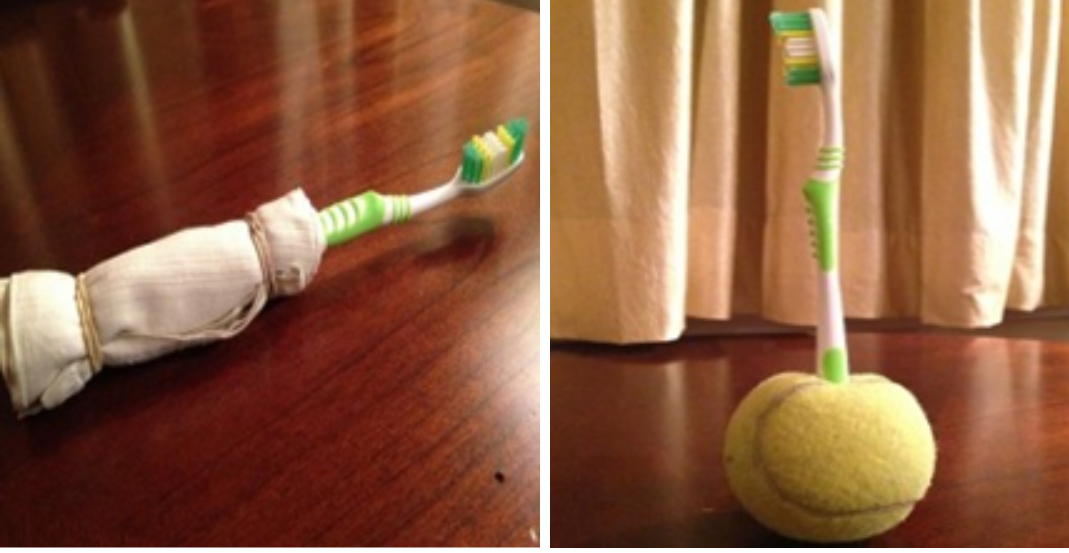
Having a larger surface area to grip is much easier than gripping a small toothbrush handle. Enlarging the area by adding a sponge, cloth or tennis ball to the handle makes it easier for it to hold (Exceptional Smiles, n.d.).
Flossing technique
There are many flossing aids out there such as proxabrush, waterpik, floss picks, etc. Each senior may require a different aid that is comfortable for them according to their needs.
Brushing alone is not enough to ensure adequate plaque removal. Floss reaches those areas that the bristles of the toothbrush are not able to reach such as in between your teeth and 1-3 mm underneath the gum (Canadian Dental Association, n.d.) .
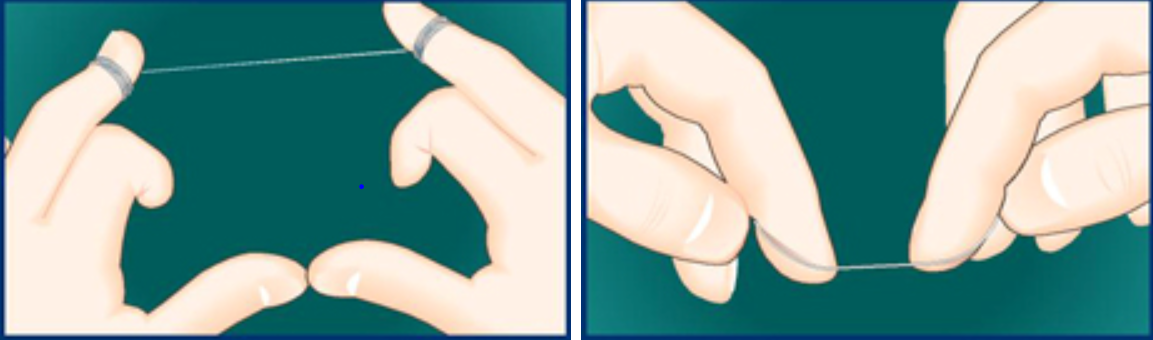
Step 1: Retrieve floss approximately a foot-long. Wrap it around both your middle fingers leaving an inch in space. The floss will be guided by the index fingers and/or thumbs (Canadian Dental Association, n.d.).
Step 2: Gently see-saw the floss in between the teeth and once it is in wrap it around one side of the tooth into a “C- shape”. Gentle go up and down for two to three times, making sure to go underneath the gum line (Canadian Dental Association, n.d.). Before snapping the floss out, ensure that the adjacent surface is also cleaned.
Mouthrinse
Seniors who suffer from xerostomia (dry mouth) whether it is due to medical conditions, medications or other causes, should include a mouth rinse in their daily oral hygiene routine. Mouthrinses that are commonly used for xerostomia include: Oasis mouthwash by Sensodyne, Biotène mouthwash and Orazyme Dry Mouth mouthwash (Garcia et al., 2013, p. 156).
By doing these steps, seniors will have an adequate oral hygiene routine care which is important in maintaining their quality of life. Those who care for dependent seniors are required to have adequate knowledge not only on their systemic health, but oral health as well. Lastly, regular dental professional care is necessary in order to maintain optimal oral health.
AE
References
Canadian Dental Association. (n.d.). Brushing and flossing. [Image of C-string flossing technique]. Retrieved from http://www.cda-adc.ca/en/oral_health/cfyt/dental_care_seniors/flossing_brushing.asp
Exceptional Smiles. (n.d.). Adaptations for the toothbrush. [Image of adaptations for toothbrush]. Retrieved from https://exceptionalsmiles.org/oral-hygiene-basics/the-toothbrush/
Garcia-Godoy, F., Harris, N., & Nathe, C. (2013). Primary Preventive Dentistry (8th Edition) [Texidium version]. Retrieved from http://texidium.com

 Bringing Life to Your Smile