Dementia – I can’t remember if I brushed my teeth

Dementia and its Impact on Oral Health

Figure 1: Confused Elderly Man. (Rosenthal, 2017).

Dementia impacts the entirety of a senior’s life including memory, behaviour, brain function, language, and everyday functions. (Alzheimer Society Canada, 2018).  As it progresses its impact and severity increases. (Alzheimer Society Canada, 2018).  As stated previously dementia impacts the daily life of the elderly. When you think of everyday functions you may think of cooking dinner, doing the laundry, using the washroom, driving to the grocery store, or taking medications. One important aspect of daily life impacted by dementia is oral care.

Seniors with dementia may struggle with remembering that they need to brush their teeth or take out their dentures at night. (Alzheimer’s Association, n.d.). It can also influence their ability to perform oral care thoroughly and properly. (Alzheimer’s Association, n.d.). Thus, their oral health can greatly deteriorate as well as their quality of life.

Oral health care is an important daily routine that cannot be skipped. Without proper care your oral health will decline and may manifest as cavities, gingivitis, periodontitis, bad-breath, lost teeth, tooth sensitivity, and oral infections. (ODHA, n.d., p. 1). These undesirable outcomes have a great effect on their quality of life. (Stewart, 2012). For example, it impacts their social abilities whether it is a lack of self-confidence due to unattractive teeth or an inability to speak as well as once before. (Stewart, 2012). The happiness of seniors is jeopardized when oral care is not a priority. The ability to eat is also compromised if there is dental pain or a lack of teeth leading to potential weight loss and malnourishment. (Stewart, 2012). Furthermore, it has been noted oral health is linked to one’s overall health. (ODHA, n.d., p. 1). Poor oral health introduces bacteria into the blood stream. (ODHA, n.d., p. 1). Once in the blood stream these bacteria are brought all around the body. (ODHA, n.d., p. 1). Bacteria from infections in the mouth have the potential ability to increase the likelihood of cardiovascular and respiratory issues. (ODHA, n.d., p. 1). Therefore, it is of great importance that oral health in seniors with dementia is not forgotten because it impacts their overall health and quality of life.
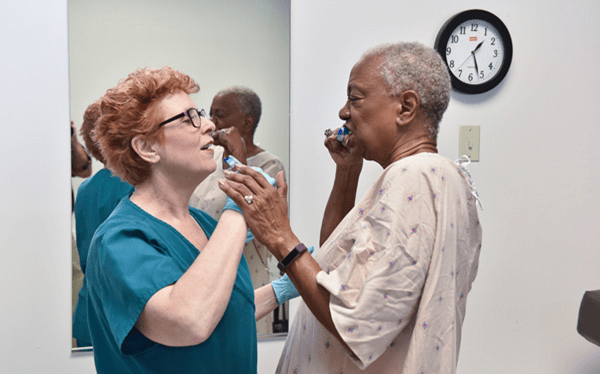
Figure 2: Nursing Staff Helping Resident with Routine Oral Care. (UAB School of Nursing, 2018).

Partners, family members, nursing staff, and dental hygienists have the ability to improve the oral health of seniors thus preventing the repercussions poor oral health brings. It is always important for seniors with dementia to attend regular dental appointments to catch dental issues early and preventing extensive dental procedures in the future. (Alzheimer’s Association, n.d.). You can play a part by booking appointments, driving them to appointments, educating them of why they need regular dental appointments. In the early stages of dementia, it is important to remind the elderly with dementia to brush their teeth using simple instructions. Rather than an ambiguous phrase of “brush your teeth.” (Alzheimer’s Association, n.d.). You may remind them face-to-face or leave notes in their room to remind them to brush their teeth and the steps that the task takes. As it progresses you may choose to guide their oral care to ensure that they are doing their self oral care properly. If it is noticed that they are having difficulty properly performing oral care due to dexterity issues you may want to try a new toothbrush or flossing aid. There are many different modified toothbrushes specifically to increase dexterity and electrical toothbrushes are available as well. Some interdental aids that can be used instead of regular string dental floss are floss picks, floss holders, interdental brushes, water piks, etc. (American Dental Association, 2019). However, as the dementia becomes more severe, care takers and family members be needed to do their oral care for them. (Alzheimer’s Association, n.d.). If this is the case, it is important to remember to communicate with the senior before going ahead and sticking a toothbrush in their mouth. Be sure to ask them and explain what you will do. Then show them what you will use and what you will do. Finally, then you may begin oral care. (ODHA, n.d., p. 2).
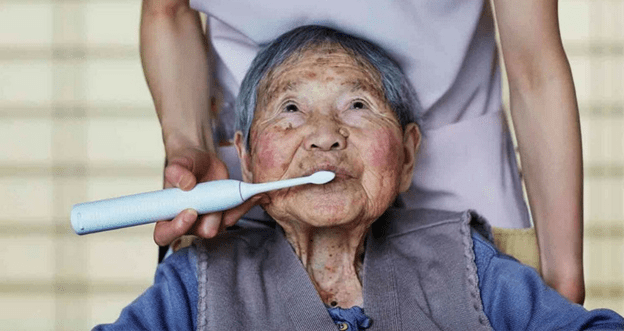
Figure 3: Elderly Woman with Dementia Receiving Routine Oral Care. (Docherty, 2017).

Oral care for seniors does not just encompass brushing twice a day with fluoridated toothpaste and flossing. It also includes caring for dentures. It is important that seniors with dentures remove them at night and regularly clean the dentures. (ODHA, n.d., p. 2). Whether the dentures are full or partial it is important to remove them regardless. If they are not removed, they can negatively impact the oral health and overall health of the senior. (ODHA, n.d., p. 2).

Oral care is a large need of seniors living with dementia. It is important to recognize that seniors with dementia may need reminders or help with their daily oral care activities. Whether you’re a family member, a nurse, or a dental hygienist, it is vital that you look out for the oral health in seniors with dementia. You can make a difference in the life of a senior with dementia. You can improve their life quality and prevent further health complications in the future.   

SD

References

Alzheimer’s Association. (n.d.). Dental care. Retrieved on May 10, 2019 from https://www.alz.org/help-support/caregiving/daily-care/dental-care

Alzheimer Society Canada. (2019, August 11). Dental care. Retrieved on May 10, 2019 from https://alzheimer.ca/en/Home/Living-with-dementia/Day-to-day-living/Personal-care/Dental-care

Alzheimer Society Canada. (2018, August 24). What is dementia? Retrieved on May 10, 2019 from https://alzheimer.ca/en/Home/About-dementia/What-is-dementia

American Dental Association. (2019, March 25). Floss/interdental cleaners. Retrieved on May 10, 2019 from https://www.ada.org/en/member-center/oral-health-topics/floss 

Docherty, A. [Author]. (2017, March 8). What is the Best Dental Care for Dementia Patients_ _ HelloCare. [Image of Elderly Woman Receiving Oral Care]. Retrieved on May 10, 2019 from https://hellocaremail.com.au/dental-care-for-dementia-patients/

Ontario Dental Hygienists’ Association. (n.d.). For caregivers- a guide to providing oral care. [PDF]. Retrieved on May 10, 2019 from https://odha.on.ca/wp-content/uploads/2016/08/ODHA-Facts-Caregivers-VFS18.1.pdf

Rosenthal, M. (Photographer). (2017, October 16). 274timecapsule. [Image of Confused Elderly Man]. Retrieved on May 10, 2018 from https://stanfordflipside.com/2017/10/class-of-72-alum-returns-to-campus-to-find-mayonnaise-sandwich-he-put-in-time-capsule-missing/

Stewart, S. L. (2012, November 23). Daily oral hygiene in residential care. Canadian Journal of Dental Hygiene 47(1), 25-30. Retrieved on May 10, 2019 from https://www.cdha.ca/pdfs/Profession/Journal/CJDH47_interactive.pdf

UAB School of Nursing. (Photographer). (2018, October 29). UAB-Nursing-Dental-fi. [Image of Nursing Staff Helping Resident With Oral Care]. Retrieved May 10, 2019 from https://anha.org/brushing-away-infections-improving-quality-of-life-for-nursing-home-patients/
Thank you Oral Cancer Screenings, you’re a Life Saver

The Importance of Oral Cancer Screenings


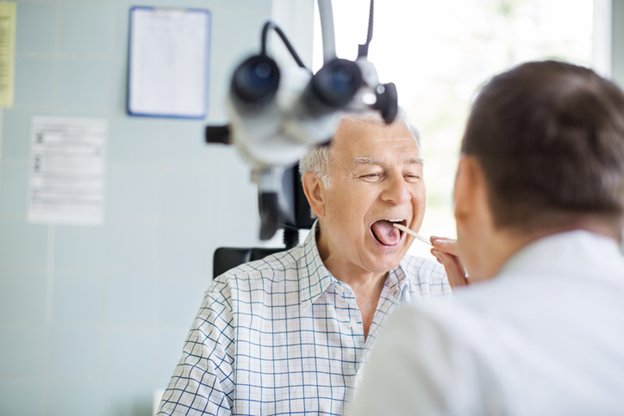
Figure 1: Oral Cancer Screenings at Medical Office. (Kalil&Kress Family and Cosmetic Dentistry, n.d.).

Did you know that oral cancer ranks as “the sixth most common cancer.”? (Atherley, Taylor & Aquilina-Arnold, 2010, p.7). Oral cancer is found in the oral cavity, otherwise known as the mouth. Though oral cancer may begin in the oral cavity it may develop within nearby or farther regions of the body. This spread of oral cancer to farther bodily regions is called metastasis. (Canadian Cancer Society, n.d.). Oral cancer is greatly impacting the elderly in our society. Oral cancer instances greatly increase with age. (Laronde, Hislop, Elwood & Rosin, n.d., p.2). In a journal article published by Canadian Journal of Dental Hygiene, it states those at the greatest risk for oral cancer are over the age of sixty. (Laronde et al., n.d., p.1). Therefore, your aging loved ones are placed at higher risk.

There is no single causative factor that causes oral cancer to begin. However, there are multiple risk factors that may impact cancerous formations. As many may already know, tobacco greatly increases the likelihood of cancer formation whether in oral cavity or other areas of the body. (Laronde et al., n.d., p. 2). Furthermore, the use of tobacco and excessive alcohol are strong risk factors that together increase the chances of developing oral cancer. (Laronde et al., n.d., p. 2). Other risk factors include a lack of fruits and vegetables incorporated in to a regular diet, Human Papilloma Virus, and excessive exposure to UV rays. (ODHA, n.d., p. 1).

Early detection and diagnosis are of great importance. Greater survival rates are seen within cases where oral cancer was spotted early. (Laronde et al., n.d., p. 1). This is why family members, seniors, nursing staff, and dental hygienists must be aware of the increased risk for oral cancer in the elderly. Early detection can save your loved one’s life. Regular oral cancer screenings for seniors by themselves, family members, dental hygienists, PSWs, etc., can help in the early detection and diagnosis.


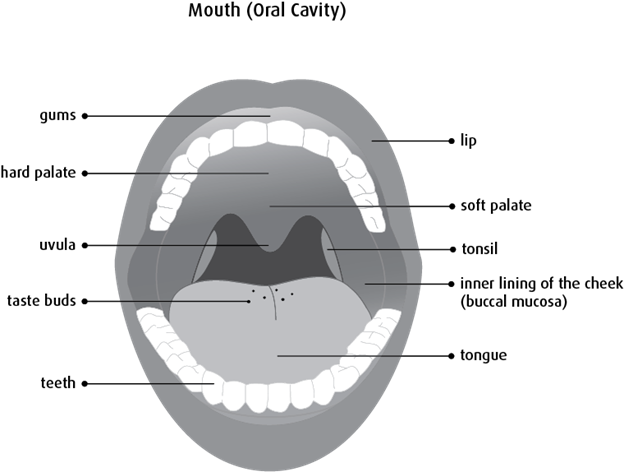
Figure 2: Anatomy of the Oral Cavity. (Canadian Cancer Society, n.d.).

“What is oral cancer screening?” you might ask. Oral cancer screenings are a sequence of steps used to observe any changes inside and outside of the mouth. Oral cancer is not normal, therefore, any unusual lesions or changes in the mouth may indicate precancerous or cancerous formations. Changes such as:

–          non-healing sores on the lips or in the mouth (National Cancer Institute, 2019).

–          white patches (National Cancer Institute, 2019).

–          red patches (National Cancer Institute, 2019).

–          colour changes within the mouth (National Cancer Institute, 2019).

–          voice changes (National Cancer Institute, 2019).

–          difficulty moving the tongue (National Cancer Institute, 2019).

–          difficulty speaking or swallowing (National Cancer Institute, 2019).

–          lumps within the lips or mouth (National Cancer Institute, 2019).

–          numbness in the lips or mouth (National Cancer Institute, 2019).

–          loose teeth (National Cancer Institute, 2019).

–          ill-fitting dentures (National Cancer Institute, 2019).

–          lumps within the throat or sore throat (National Cancer Institute, 2019).

–          constant earache (ODHA, n.d., p. 1).

–          Any unevenness in the face called asymmetry (ODHA, n.d., p. 1).

–          lymph nodes that have become solid and immoveable (ODHA, n.d., p. 1).

If these changes are noted to last for two weeks or longer, it is recommended that a consultation be made with their dentist or physician. (ODHA, n.d., p. 1). Bringing this information to the attention to the dentist or medical physician is important. Whether or not this change or growth is cancerous it is better to have a professional opinion than not report anything at all.  

As elderly individuals, family members, friends, nursing staff, dental hygienists who are knowledgeable on the increased risk of oral cancer in the elderly you have an important role of observation and communication. Though oral cancer screening sounds daunting, the steps are simple to follow.

1.       Look at and around and touch the face. Do you notice any changes in colouring, touch, or symmetry? (ODHA, n.d., p. 2). Look around the back of the neck, ears, and scalp as well. A tip when observing the face is to remove glasses because they may cover up potentially cancerous changes. (ODHA, n.d., p. 2).

2.       Listen for changes or complaints that the senior might have. (ODHA, n.d., p. 2). Is their throat hoarse? Are they complaining about a lump in their throat or that their dentures aren’t fitting properly? (ODHA, n.d., p. 2).

3.       Go intra-orally (into the mouth). If you are performing this on a senior it is recommended that you wear gloves and using a flashlight when assessing their mouths. If the senior has a denture or other oral appliance kindly ask them to remove it prior to beginning your intra-oral assessment. (ODHA, n.d., p. 2). Take a look and feel around in the mouth. Is there anything unusual or different that you see such as a colour change, a swelling, a sore spot? (ODHA, n.d., p. 2). A tip when observing the mouth is to follow a pattern that you can remember so that no area goes unnoticed.


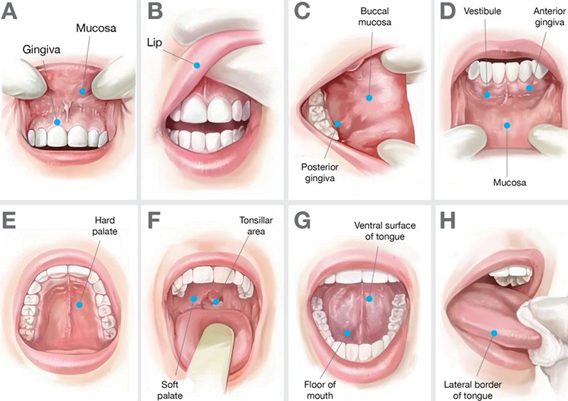
Figure 3: Oral Cancer Screening Steps.(HealthCare Global, 2018).

Areas in the mouth that are important to assess are:

–          The lips – the outside and inside (ODHA, n.d., p. 2).

–          The gums (ODHA, n.d., p. 2).

–          The entire tongue – front, back, bottom, sides (ODHA, n.d., p. 2).

–          The floor of the mouth (the area between the bottom teeth and the tongue). (ODHA, n.d., p. 2).

–          The cheeks (ODHA, n.d., p. 2).

–          The roof of the mouth also called the palate (ODHA, n.d., p. 2).

–          The back of the throat (ODHA, n.d., p. 2).

You can save a life; you have to power to improve a senior’s life. Let’s protect our seniors through early detection.  If you had oral cancer, wouldn’t you want it to be caught early? Our seniors need you and need to be educated on the risks of oral cancer.

SD

References

Atherley, G., Taylor, L., Aquilina-Arnold, J. (2010, July 15). CDHO advisory oral cancer. [PDF]. Retrieved on May 10, 2019 from http://www.cdho.org/Advisories/CDHO_Advisory_Oral_Cancer.pdf.

Canadian Cancer Society. (n.d.). What is oral cancer? Retrieved May 10, 2019 from https://www.cancer.ca/en/cancer-information/cancer-type/oral/oral-cancer/?region=sk

Canadian Cancer Society. (Author). (n.d.). 994378ad2dfd44e98c82d6a98b9b0ca9. [Oral Cavity Diagram]. Retrieved May 10, 2019 from https://www.cancer.ca/en/cancer-information/cancer-type/oral/oral-cancer/?region=sk

HealthCare Global. [Author]. (2018, July 26). DjFlxdTXsAA-bAz. [Intra-Oral Cancer Screening Steps]. Retrieved on May 10, 2019 from https://twitter.com/hcgcancercare/status/1022710558531891200

Kalil&Kress Family and Cosmetic Dentistry. (Author). (n.d.). iStock-840513998. [Image of Oral Cancer Screening]. Retrieved on May 10, 2019 from https://kalilandkress.com/category/oral-cancer-screening/ 

Laronde, D. M., Hislop, T. G., Elwood, J. M., Rosin, M. P. (n.d.). Oral cancer: just the facts. Canadian Journal of Dental Hygiene. 74 (3), 269-272. Retrieved May 10, 2019 from https://cda-adc.ca/jcda/vol-74/issue-3/269.pdf

National Cancer Institute. (2019, March 7). Lip and oral cavity cancer treatment (adult) (PDQ) – Patient Version. Retrieved on May 10, 2019 from https://www.cancer.gov/types/head-and-neck/patient/adult/lip-mouth-treatment-pdq#_1

Ontario Dental Hygienists’ Association. (n.d.). Oral cancer self-examination. [PDF]. Retrieved on May 10, 2019 from https://odha.on.ca/wp-content/uploads/2016/08/Oral-Cancer-Self-Exam14.1-copyright.pdf